
Identify which assumption has changed
Compare the new plan with the washing arrangement originally discussed. Have the dates moved, the occupied hours lengthened, or the station’s position changed from a protected area to an exposed one? Has a room or connection you expected to use become unavailable? Describe the change itself rather than calling the station an all-season unit or assuming that a familiar model will work anywhere.
Give the provider the full Grand Rapids address, revised dates, operating hours and proposed position. Explain who needs to wash and when demand peaks. A handwashing station supplies a different function from a toilet or a sanitizer dispenser; changing the site conditions does not remove the need for suitable washing or establish that another activity’s sink is available to your group.
Ask what the offered station can support at that position
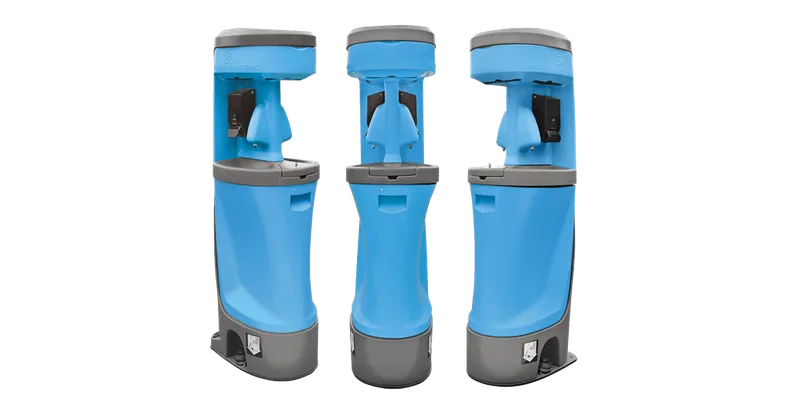
Confirm the actual model and its clean-water and used-water arrangements. A stored-water station and equipment dependent on permitted connections have different support questions. Ask the provider to assess the revised dates and exposure against the instructions and operating limits of the model it proposes. This guide does not set a temperature threshold or promise that any unit can operate in every condition.
Show how people will approach and use the station, including users who need an accessible arrangement, and how the supplier can reach it for care. A roof or enclosure does not by itself establish suitable operation. The proposed position still needs a usable surface, room at the controls, safe circulation around doors and any support the provider specifically requires.
Choose a supported revision, not an improvised workaround
If the original proposal is no longer suitable, ask which alternatives are actually offered. The provider may be able to assess a different model or an approved position; the property manager may be able to confirm a suitable existing washing facility for the required users and hours. Compare only the options those parties have described. Do not count a nearby building or a supposed replacement unit that has not been agreed.
Do not add chemicals, heaters, makeshift connections or an unapproved enclosure to make rented equipment fit the changed plan. Ask for the provider’s answer before accepting the revised arrangement. If no suitable washing option has been established, the facilities plan remains unresolved; a booking description or sanitizer bottle does not close that gap.
Carry the revised answer into the whole rental
Have the quotation or accepted change identify the station, quantity, position, dates and approved support. Clarify clean-water provision, soap and drying supplies, used-water removal, cleaning and replenishment. Include delivery and collection arrangements and the person who can keep the agreed service access available; a change of position can affect those visits even when the number of users stays the same.
Give the receiving contact the revised details rather than an outdated layout. During use, report a new exposure concern, supply shortage or loss of washing function through the agreed contact and follow the provider’s instructions. Do not repair, drain or move the equipment yourself. Confirm any further response or rental change instead of assuming extra visits or replacement stock are included.
Questions before you book
Can we use the same station if the event date changes?
Ask the provider to review the actual model, new dates and site conditions. A date change may leave the arrangement suitable, but the earlier proposal does not establish that without review.
Does putting the station under a tent make it suitable?
Not automatically. Obtain the provider’s acceptance of the actual position and support, and the property contact’s permission. Do not treat an improvised cover as proof of suitable operation.
Can sanitizer replace the washing arrangement while we decide?
A sanitizer dispenser and a handwashing station are different provisions. Confirm what the activity and responsible site contact require; do not assume one replaces the other.
What should be updated after a revised setup is accepted?
Record the actual station, dates, position, support, water and supply responsibilities, care, transport and reporting contact so the receiving and operating teams use the same plan.